Centrifugal Pumps
Heavy-duty centrifugal pumps for mud transfer, mixing, charging and general slurry service across drilling and industrial operations.
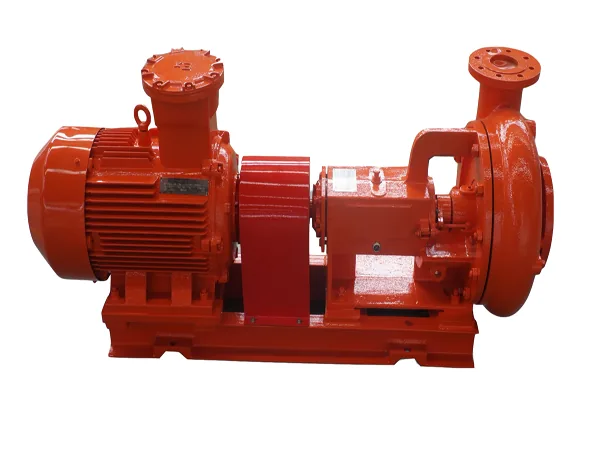
Centrifugal pumps are the workhorse of every fluids skid — mud mixing, tank-to-tank transfer, mud-cleaner and desilter feed, cooling water, and general utility service. Correctly specified, they run for years with minimal intervention; poorly specified, they cavitate, wash their seals and pull the whole system into unplanned downtime.
Paragon supplies horizontal end-suction and split-case centrifugal pumps in oilfield and industrial configurations, with hard-iron, ductile-iron or 316L wetted parts and a full range of mechanical seal options.
How it works
- 1An electric or hydraulic motor drives an impeller inside a volute casing at constant speed.
- 2Fluid enters the impeller eye axially and is thrown outward by centrifugal force, gaining velocity and pressure as it exits the impeller vanes.
- 3The volute converts velocity into discharge pressure and directs the flow to the discharge flange.
- 4Suction conditions (NPSH available) and impeller geometry determine whether the pump runs stably or cavitates.
Typical specifications
Specifications indicative — actual configuration sized against your specific process.
Typical applications
- Mud mixing and charging on drilling rigs
- Desander / desilter / mud-cleaner feed duty
- Tank-to-tank transfer of drilling and completion fluids
- Slurry transfer in mineral processing and dewatering
- Cooling water, service water and utility duty
Selection factors
Duty point over headline flow
A pump curve is only useful at the actual duty point. Confirm both flow and head at the operating condition, not the peak of the curve — running far off best efficiency point (BEP) wrecks bearings and seals fast.
NPSH available vs required
Cavitation is the single most common cause of centrifugal pump failure. Calculate NPSHa at the actual suction condition and select a pump with meaningful margin (typically NPSHa ≥ NPSHr + 1 m).
Seal selection is not optional
Packed glands are cheap and simple but leak by design. On abrasive or hazardous service, specify a properly sized mechanical seal with a compatible flush plan (API 682 Plan 32 / 53 on the worst duties).
“If a centrifugal pump keeps eating seals, the answer is almost never a better seal — it is NPSH or misalignment. Fix the root cause first.”
Spares we supply
Why Choose Paragon
30+ years of field experience
Our engineers have specified, commissioned and troubleshot equipment on projects across Europe, Africa, the Middle East and the Americas.
Independent technical advice
We are not tied to a single manufacturer — recommendations are driven by fit for your process, not by margin.
Global sourcing network
Trusted OEM and specialist aftermarket suppliers, with dual-sourced wear parts to protect you from lead-time risk.
Delivered ready to work
Inspection, testing, commissioning and technical support included — not left as an afterthought.
Responsive engineering support
One working-day response on technical enquiries, and hands-on troubleshooting when you need it.
Long-term client relationships
Most of our work comes from clients we've supported through multiple projects and equipment life cycles.
Need help specifying a centrifugal pumps?
Share your flow rate, feed characteristics and site constraints — our engineers will come back with a concrete configuration and budget within one working day.
Related equipment
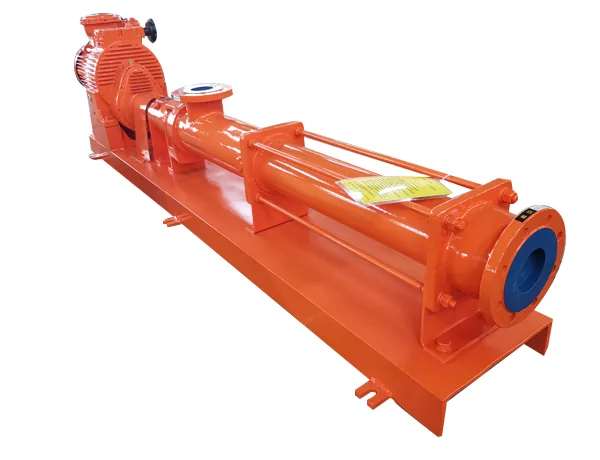
Progressive Cavity Pumps
Positive-displacement PC pumps for high-viscosity, shear-sensitive and solids-laden fluids — polymer, sludge and dosing service.
Air-Operated Diaphragm Pumps
Portable, self-priming AODD pumps for solids-laden, viscous and hazardous fluid transfer — ATEX-rated where required.
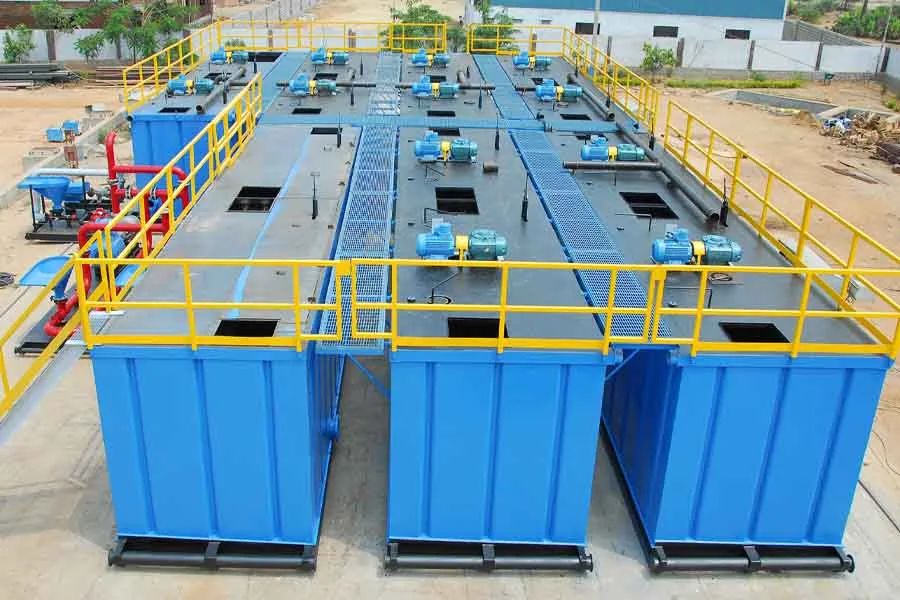
Mud Tanks & Mixing Systems
Active, reserve and mixing mud tank packages with agitators, hoppers, guns and degassers — engineered as a complete circulating system.